Showing posts with label designer. Show all posts

10.18.2010

10_1018 | migration migranes...

Hello fair readers.  A lot has happened since we last spoke.  Most significantly, after a series of moves, I have ended up in southern California.  Yes, like the millions of birds taking to the skies, I have gone south for the winter.  The question is, when will I flap my wings north again?  The future is uncertain.  At this point, I am stuck here…indefinitely.  The reason for my emigration of the great north is gainful employment.  As beautiful and freeing as self employment was, I got an offer that I didn’t refuse.  I could have, but at this point in my life it this was the smart decision.  So here I am, soaking up the famous SoCal sunshine [which thus far appears to be brown smoggy skies or misty, cloud-like rain] and enjoying all the south has to offer.  I’m back with LPA, Inc. in the Irvine office.  It’s great to be back in the saddle and working on public projects again.  I’m in the K-12 [read: schools] market segment and could give you some sappy and romantic speech about the rewards of changing the lives of kids, one school design at a time, but I will spare you.  I would never emphasize that my work allows the youth of America to have the facilities necessary to get the education they deserve.  That through my designs, kids will be able to play at recess and get the exercise necessary to live fit, healthy lives.  Oh no, I won’t bother you with the pretentiousness that I am better than you because I am single handedly making America smarter and healthier.  No, such extolling of my virtues would be arrogant and rude--and that is not what I am about.

I am currently staying with friends who are kind enough to loan me their couch whilst I get on my feet and find a place to live.  Internet access and time to think and blog are limited, so that is the reason I have been silent.  I promise that soon I will be uploading more recipes, thoughts, and rants for your entertainment.  In the meantime, please enjoy this recipe for a delicious fall treat.

spicy pumpkin soup

about 15 minutes
serves 4-6:

(1) 14 oz can pumpkin puree [not pumpkin pie mix!]
1/2 cup sour cream
1/2 cup heavy cream
2/3 cup chicken broth
4 sprigs fresh thyme, tied together with cooking twine
1 medium shallot, minced
1 tbsp butter
1/2 tsp Cayenne pepper
1/2 tsp Chipotle pepper
1/2 tsp Chili powder
3/4 tsp paprika
1/4 tsp curry powder
1/4 tsp turmeric
Salt and pepper to taste
Fresh chive spears

Melt butter in a medium sauce pan over medium-low heat.  Add the minced shallots and sauté until translucent.  Add sour cream, pumpkin puree, heavy cream, and chicken broth.  Stir ingredients together and let simmer over medium heat for 2 minutes.  Stir in thyme, cayenne, chipotle, chili powder, paprika, curry, turmeric, salt and pepper [this should make a mildly spicy soup.  Add spices to taste if you like a little more heat].  Let simmer for 6 minutes, stirring occasionally.   Remove sprigs of thyme and serve in cups with 4-5 spears of fresh chive for garnish.
 

2.17.2010

10_0216 | an era for cocktails...

Furniture design is one of my slower hobbies/interests.  It’s something that I enjoy doing, but rarely do I find the inspiration to do something like try to re-imagine a vitrine or credenza.  In my academic and more arrogant years, I thought that I possessed the skill to redesign the concept of something as simple [or complicated] as a chair.  Nowadays, I feel that many a designer struggle, and ultimately fail, in the avant garde furniture realm.  Please, kind sirs, remember that a chair has looked like a chair for millennia probably for a good reason.  I don’t bother anymore with re-invention.  I’d rather busy myself with simple, clean, effective designs that emphasize the materials and/or look cool […let’s be serious].  I’m particularly attracted to Mid-Century Modern, Scandinavian, and Art Deco styles of furniture.  The first two I appreciate for the emphasis on clean, straight lines; warm, rich materials; and clever, yet straightforward design solutions.  The latter I appreciate for the tendency towards arrogance, power, and wealth, as well as an emphasis on the richness of certain materials [burled walnut, ebony, and chrome-plated steel were all very common].

Furniture design is obviously about utility, material, and scale.  It’s also about joinery, proportion, and detail.  But it’s also about space, context, and art.  A piece must fit within the space it is intended and must look good while there.  My apartment is full of similarly styled black-veneered IKEA rectangles—not a bad choice, but a little boring in some rooms and a pain to dust—that doesn’t quite seem at home in my mid-80s contemporary apartment.  If I lived in a loft in midtown perhaps the furniture would fit in better.  My excuse is I was moving in to my own place and needed to fill up the rooms quickly and on a budget.  I like what I have, but eventually I will cycle out the cheaper monotony of Sweden for some higher quality mid-century styled pieces.

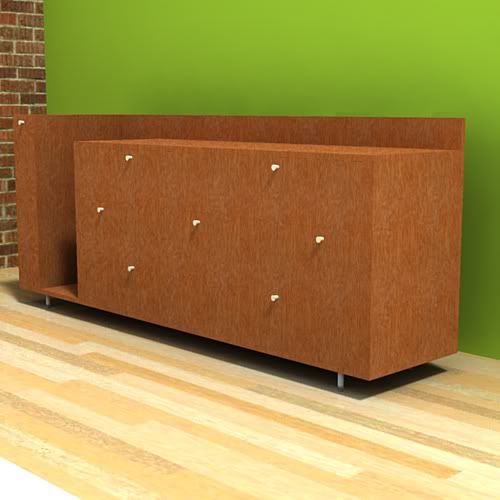
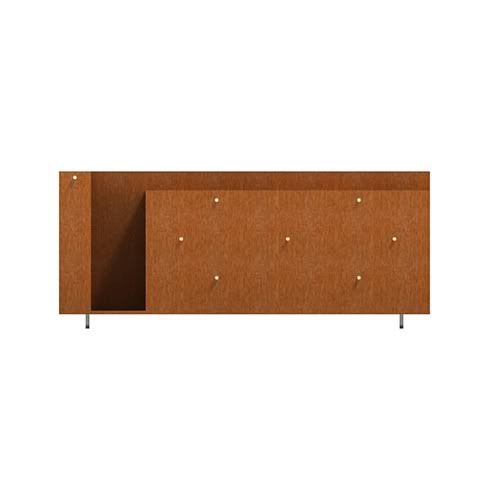
I had an idea for a credenza that would have a series of drawers and a cabinet separated by a gap wide enough for all sorts of knick-knacks, vases, etc.  One might even use the piece as a dresser and could neatly stack sweaters in the gap:

Credenza concept - steel pulls on the staggered drawers emphasize the steel legs.

Elevation of the credenza - notice the gap and cabinet on the left.


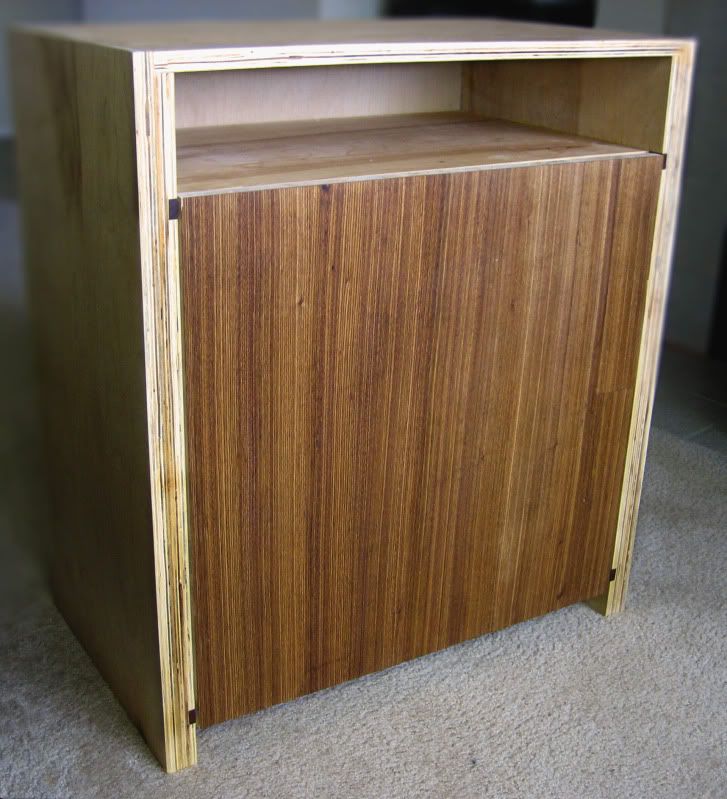
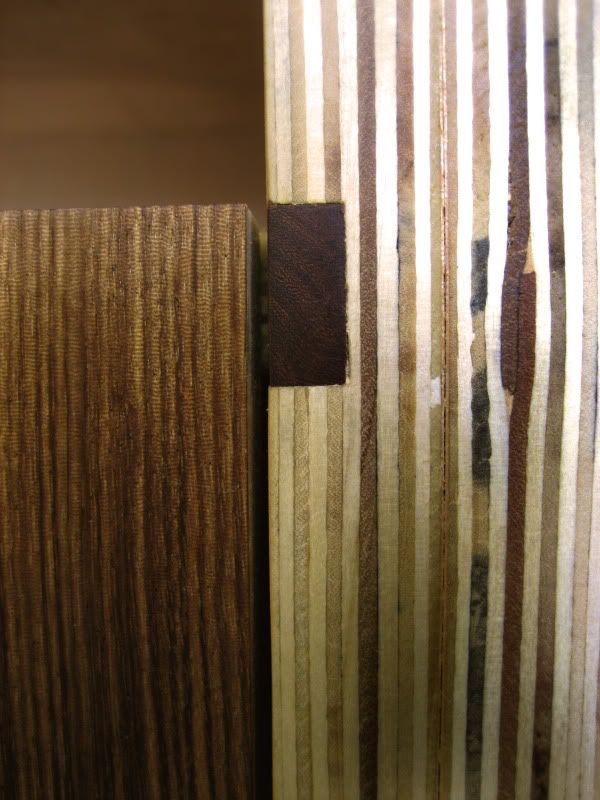
I recently completed an aquarium stand that I let sit on my dad's workbench for about a year.  He didn't appreciate it very much.  It's mostly furniture-grade Baltic birch ply construction, but I added a zebra wood veneer to the cabinet door, as well as some ipe inlays at the top and bottom of the door.


Aquarium stand that has yet to see an aquarium.


Ipe inlay at the top of the zebra wood cabinet door.


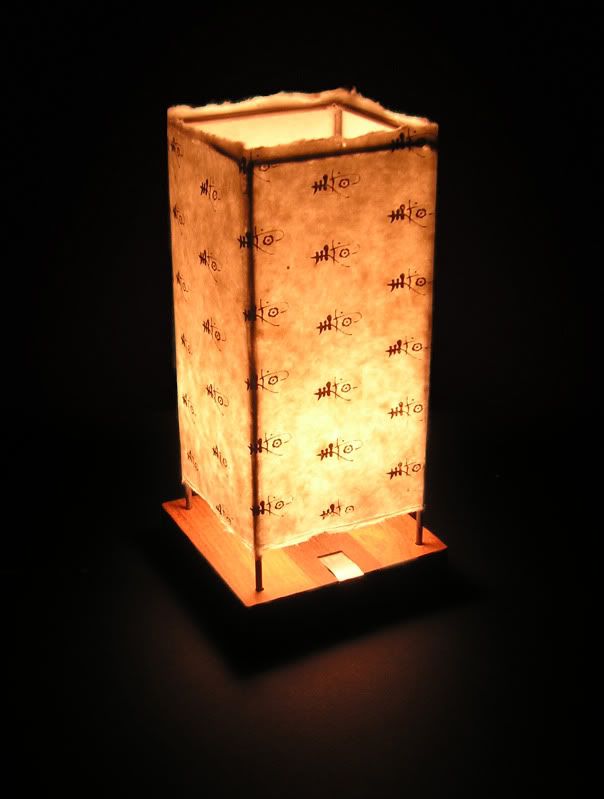
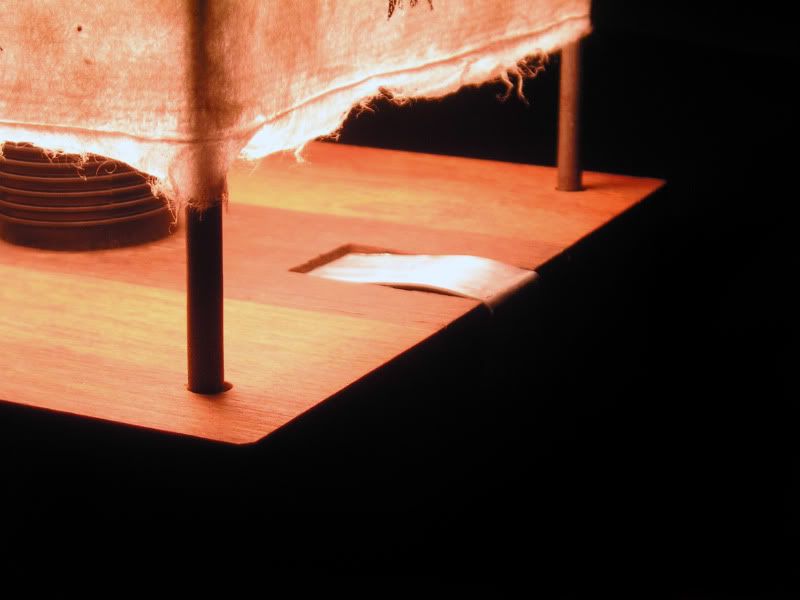
Several years ago I made my dad a lamp as a Christmas present.  I have since made most of a sister lamp of the same material.  I have yet to figure out a suitable shade attachment system for the sister lamp.  The lamp has an ipe base, steel touch-switch, and handmade paper shade.


The lamp I made for dad.  The shade is attached to a steel frame.


Detail of the steel touch-plate switch.

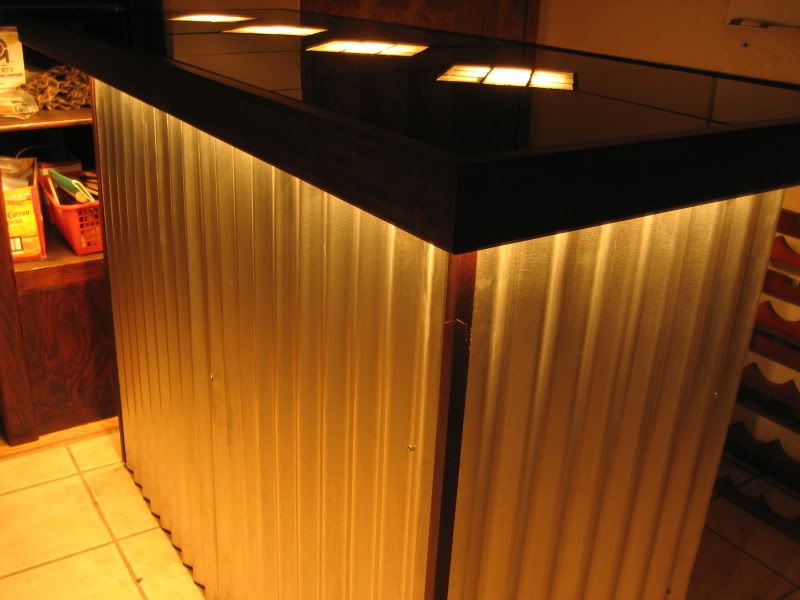
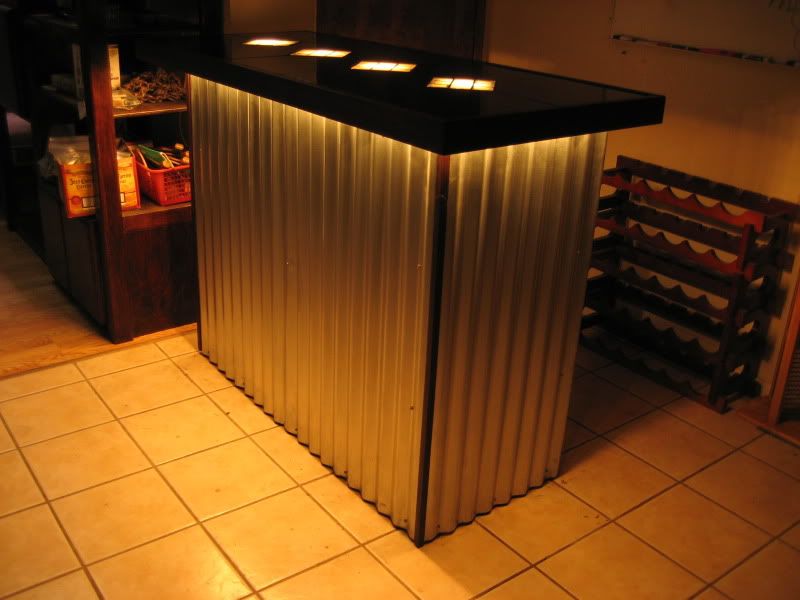
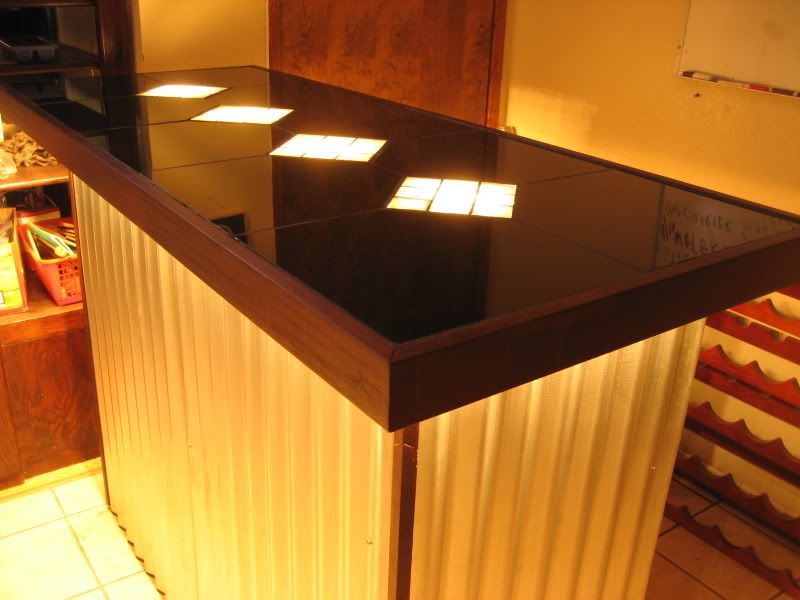
Lastly, there is, the bar I made my third year in school.  The body is made of corrugated steel with ipe trim and the top is made of two types of tile: black granite flooring tiles and a glass tile from a factory in Krchekivstania or some other equally remote Soviet country that has since gone belly up.  Yes, it was a project for a class.  Yes, I did serve drinks at the final exhibition.  And yes, I got an A.  I need to get better pictures of it.


The glass tiles are set at an angle at the corners of the granite tiles.


Lights underneath the former Soviet tiles add some 'X Factor'

1.22.2010

ultimate designers...

What is design? What makes someone a designer? What is the goal of design?

There are several professions within the realm of ‘design.’ There are those that design buildings, those that design landscapes, those that design web-pages, magazines, posters, corporate identities, shoes, clothes, furniture, interiors, books, video games, theatrical sets, etc. You get the point. But what is design? Is it the creation of something? If that were so, wouldn’t designers be better labeled as creators? Okay, so take anyone who ‘creates’ something--say a construction worker, or pipe-fitter. These aren’t designers. They follow plans to create something. One could say they are the mediators through which a design is created. So, back to the creators. Some famous creators are Picasso and Pollock. Designers? No, they are artists, right? So what’s the difference between an artist and a designer? Would you say utility? An artist creates something that has no or little utility, while a designer creates something with utility. A magazine designer creates a spread to convey information, an architect designs a house to provide shelter, a fashion designer to cover-up and provide warmth. Is an artist capable of design? Indeed. Is a designer capable of art? Absolutely. Are some designs considered art? Yes, of course. But the line between design and art is utility, between creation and design is the unique thought. Design serves the purpose of solving a problem. Sure there are creative and not-creative ways of solving problems, just as there are ugly and pretty ways to do it. Design has been inherently linked to aesthetics. When someone says they are a designer, the mind associates that with the manipulation of some medium to come to an aesthetically pleasing solution for a problem. If design is linked to problem solving and aesthetics, does that make a designer the link between engineering and art? I like to think yes.

Besides finding a solution to a problem, what purpose does design serve? Is a piece of furniture designed to evoke emotion? A web-page to communicate a certain attitude? An interior to create an ambiance? A book’s cover to relate to its contents? Maybe, yes, indeed, and certainly. So what then, is the ultimate design profession? Wouldn’t it be one that can employ the manipulation of the most senses to create a frame of mind? Or would it be one that can most thoroughly move someone [number of senses employed being irrelevant]? That, I feel is a great discussion. I do not know the answer, but I do have two professions that I feel best represent both sides.

First things first, the designers that manipulate the most senses are of course culinary designers. Their designs not only satisfy a fundamental requirement for life, but can do so to such an extent as to deliver people to near orgasmic satiation. Think back to the best meal you’ve ever had. That first bite, did you not proclaim, mouth still full of un-chewed food, something to the effect of a deep guttural “oh yea” followed by a series of moans? The flavors dance on your palate, filling your mouth with joy. Cooking employs all the senses: first you smell the flavors hang in the air, either like a heavy cloud of musky earth like cumin, or dance and twirl lightly as with citrus. Then the sound of crisp lettuce being chopped or of a sauce sautéing makes its way to your ears. You then get to see the food presented. A good chef will combine ingredients with complimenting colors so your eyes almost swell with the textures, color, and architecture of the food. Then, finally you get to the best part: the taste. Each bite fills the mouth with sweet, savory, spicy, bitter, or sour, sending signals of pleasure to your brain. That’s why some foods can be so decadent or delicious that you are rendered incapable of recognizable speech. Simultaneously, you feel the food in your mouth, under your knife or fork: crisp, smooth, slimy, crunchy. By the end of the meal, you have undergone an unadulterated assault on all your senses, leaving you full, tired, satisfied, and happy.


One of my culinary creations: sundried tomatoes, potatoes, spinach, zucchini, and italian sausage on a bed of mushroom risotto wrapped in carrot shavings and garnished with enoki mushrooms and black lava salt.

The designers that are the best at manipulating you are directors. Actually, it is the sum of parts that manipulate you, but I give credit to the directors, as they hold the vision that creates the product. They conduct the orchestra, so to speak. Think of your favorite movie. Think of the last movie that moved you to tears. Think of that movie that had you on the edge of your seat, palms sweaty, eager to see what’s next. How many times have you left an action flick hopped up and ready to kick down a door or engage in a gun-fight? What about that scary movie that had your heart racing or jumping in your seat? It’s these types of powerful experiences that keep people going back to the movies and the directors do it with only two senses at their disposal. A good director will control what you see and when and pair that with the appropriate sound. Sound has so much to do with a movie that it’s hard to notice. Watch your favorite movie on mute. You know the story already, so you don’t need the words, but I guarantee you will notice things in the film you hadn’t before. It’s because you no longer have the sound to dilute the picture. Conversely, listen to the soundtrack of a movie. Notice how the music emphasizes the moments of tension. A great example of this is the Dark Knight. Those creepy tension-mounting strings in the beginning rub you in just the wrong way to almost make you cringe. I tip my hat to the good directors who have vision enough to sew such a complex and complicated stream of images and sound together to create the intended feelings—and to do it so thoroughly as to quicken hearts, conjure tears, or lubricate palms.

To emphasize the importance of proper music in a film:
http://www.youtube.com/watch?v=Gf7h6o3I8yw

I thoroughly enjoy being a designer. Perhaps it’s arrogance that sees my job as controlling an experience through the manipulation of your senses, or perhaps not. Either way, I feel that in order to be a good designer, one has to understand how certain aspects will affect a person and to utilize them appropriately. It would not, of course, be prudent to create a park that evoked a feeling of tension, danger, or fear. As a designer, you need to understand how your product will be used and how to best control the user’s experience so that they may want to use it again.

1.04.2010

...reaction, thoughts, plans

taken from my sketchbook a few days after I was laid off, dated 09_0917

As I sit on my balcony, taking in the morning air and the day’s second green tea, the mid-morning walkers take their federally appointed ‘15’ around the block below me. It wasn’t too long ago that I was in their place, thankfully out of the office, striding with my coworkers, complaining about the idiocy that fills the office. This morning my companions are my iPod and a specimen of a praying mantis. The mantis has taken to the rangy basil I grow on my balcony. As I share the morning with her, I think of the things I have to do today: call the credit card company about a rogue charge, call the power company and get my bill paid, go to the unemployment office and apply for ‘government funding,’ and perhaps clean the bathroom—all tasks that neither interest me, nor need to get done today; a lethal combination for the unemployed and unmotivated.

I thought it would be harder. I thought I would be beside myself with anger and bitterness. I thought I would loathe the days of inactivity and be eager to hit the streets, looking for a new job. I thought I would mope and weep about: ‘whatever will I do?’ Instead I feel none of this. I feel relief. A disburdening. Opportunity. I’m surprised at my indifference towards the workplace. Had it been that bad in the office? Was I that burnt out about my job? Besides not having someplace to go, something to do during the day, I don’t seem to care that I’ve got no job. I don’t care that today I don’t have a fence elevation to create or grades to check for code compliance. No, I almost prefer it. I like that I can do the things that I’ve been wanting to do. And yet, now that I’ve had time to reflect, I am disappointed in myself. I’m not disappointed that I’ve lost my job, no, that was beyond my control, and lies completely on this failing economy. No, I’m disappointed that while I was employed, I let myself stray so far from myself and my dreams.
I was working at a job that, though I didn’t dislike it, I didn’t love it. Daily, I would recognize its flaws and be powerless to change them. It was an activity, a paycheck, something to pass the time, but in no way a dream come true. There was a time when I thought it was, but as work slowed down my tasks became increasingly dull. Perhaps that too can be blamed on the economy, perhaps not. I’m not pointing fingers. But I think, finally, I understand what my professors meant when they said ‘the real world.’

School is a magical place, especially so for designers. Everything in school is a design problem with an infinite number of solutions. There are few guidelines and little nay-saying. Words are ones of encouragement, of inspiration, of cultivation. Creativity is highly valued and greatly encouraged. As a result, the imagination of a designer is pure in school. It is untainted by code, or client, or cost. In the magical world of academia, the onus is on you, the sole designer, to accomplish what it is you want. There are few rules. In the real world—at least for graduates--you’re the low man on the totem pole and you accomplish what is given to you. But, more than that, more than having a smaller piece of the design pie, the real world confronts you with responsibilities that hold the designer back and rob you of the precious time you need to cultivate yourself, to feed that raging and hungry designer within.

Two years ago, I graduated school with a bouquet full of dream-filled balloons. Throughout school, as you find who you are, this bouquet fills and becomes as varied and assorted as you are. It becomes more defined, more tangible. When I graduated, I held my bouquet close. It floated just over my head, on a short leash. Gradually, however, as the real world weighed in and I assimilated into it, I let the leash out. While I was drinking my coffee and sitting in front my computer, I let the balloons out, one by one, until finally, they were but a spec in the sky, tethered by little more than a fragile thinning thread. That is my real world. It is what let out my balloons. It is what forced the indifference and laziness towards them. It is thinning thread, the distance between me and them, the jet stream that carries them.

So it is not a feeling of disappointment about losing a job that I feel. It is a feeling of disappointment in myself for letting my designer down. I’ve ignored that raging and hungry designer. And now that I’ve got time to look, and eyes to see, I can’t even see a good reason why I did. I pray my insight will nurture the now ragged and torn designer back to his usual self.